

The Captain Cannot Be Told
What aviation realised with in 1979. What surgery still hasn't.


In the cockpit of a DC-8 over Portland, on a December evening in 1978, two men knew the plane was about to crash.
The first officer knew it. The flight engineer knew it. The fuel gauges had been telling them for nearly an hour that they were running out, and they had been telling the captain; in increasingly anxious half-questions and hedged remarks:
“How much more fuel do we have?”
“Fuel is getting close, sir”
“I think you just lost number four”
The captain, absorbed in a landing gear malfunction, did not act on what they were saying. He was the captain. He was working the problem. They were not.
A few minutes after the last warning, all four engines flamed out from fuel exhaustion. United Airlines Flight 173 crashed into a wooded suburb of Portland. Ten people died.
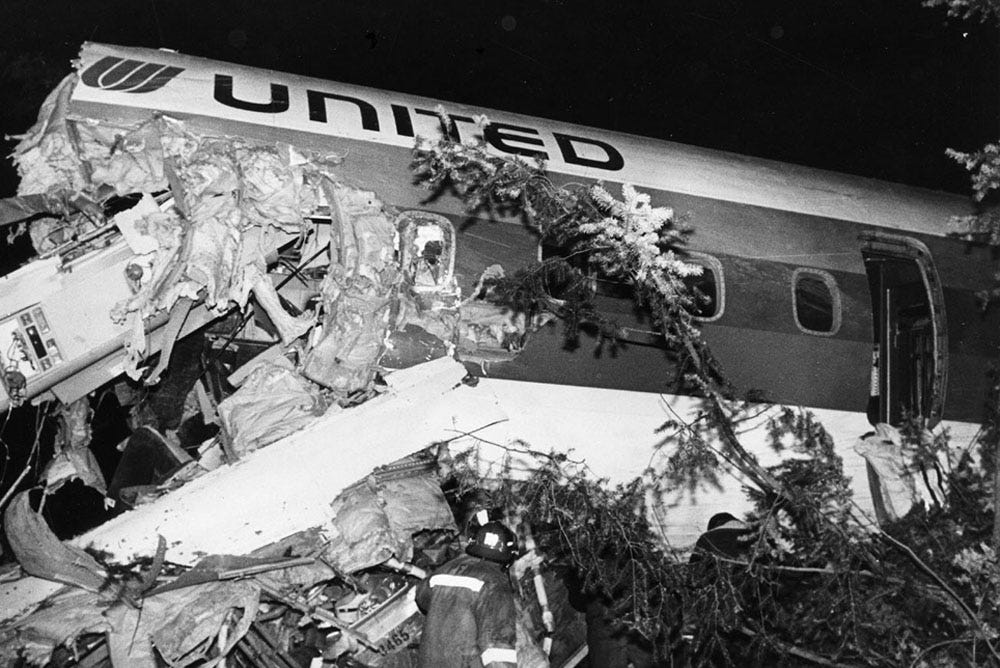
The NTSB report identified the probable cause as the failure of the captain to monitor the aircraft’s fuel state. That was the technical finding. What the investigation actually revealed was something harder to write down in a report: two trained, qualified crew members had watched the disaster unfold for forty minutes and could not make the captain hear them.
It was not the first time. A year and a half earlier, on a fog-bound runway in Tenerife, the most senior pilot at KLM — the airline’s chief flight instructor — had begun his takeoff roll without clearance. His first officer and flight engineer both had concerns. Neither asserted strongly enough to stop him. A Pan Am 747 was still on the runway in the fog. Five hundred and eighty-three people died. It remains the deadliest accident in aviation history.
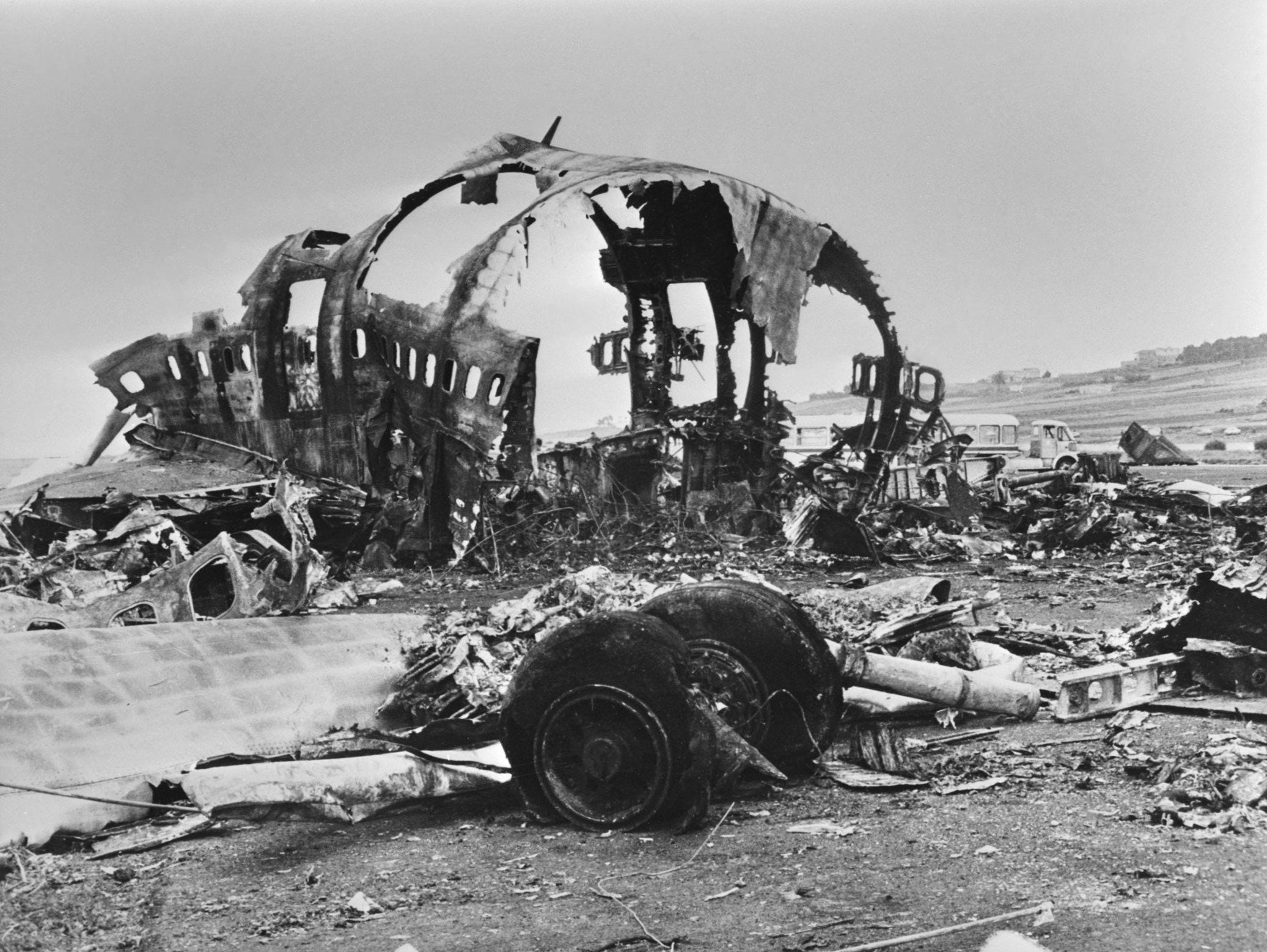
These were not accidents of mechanics. They were accidents of culture.
The Reckoning
Aviation, to its credit, reckoned with this.
In 1979, NASA convened a workshop on human factors in flight crew performance. Out of that workshop, and out of the years of work that followed it, came a discipline that would change commercial aviation more fundamentally than any technical innovation of the era: Crew Resource Management.
The idea behind CRM was almost embarrassingly simple. It said: the captain is still in command, but the crew is a team. Information must flow up the hierarchy as well as down it. Junior members must be trained to assert. Senior members must be trained to listen. The cockpit must be a place where saying “I think we have a problem” carries no career cost.
United Airlines launched the first formal CRM program in 1981. Within a decade, every major airline in the world had adopted some version of it. Today, you cannot fly commercial without it. Commercial aviation became, by a wide margin, the safest mode of mass transit ever built — and the cultural reform of the cockpit is one of the principal reasons it did.
This is one of the great safety transformations in industrial history. And it happened because aviation, after Tenerife and Portland, was willing to name what it actually was: a profession in which the senior person could not be questioned, and people died as a result.
The mirror
Read those last two paragraphs again, and ask whether they describe any other profession you happen to work in.
In 2000, Bryan Sexton and colleagues published a now-famous study in the BMJ. They surveyed more than 30,000 commercial pilots and just over a thousand operating room staff using analogous questionnaires about safety, error, fatigue, and teamwork. The findings were not subtle.
When asked whether fatigue affects their performance, 26% of pilots said it does not. 70% of consultant surgeons said it does not.
When asked whether senior team members were appropriately open to input from junior members, the answers between the two professions diverged. And, more telling, within the operating room, the answers between the senior and junior people in the same room also diverged. Surgeons rated the teamwork in their ORs as good. The nurses working alongside them rated it as mediocre.
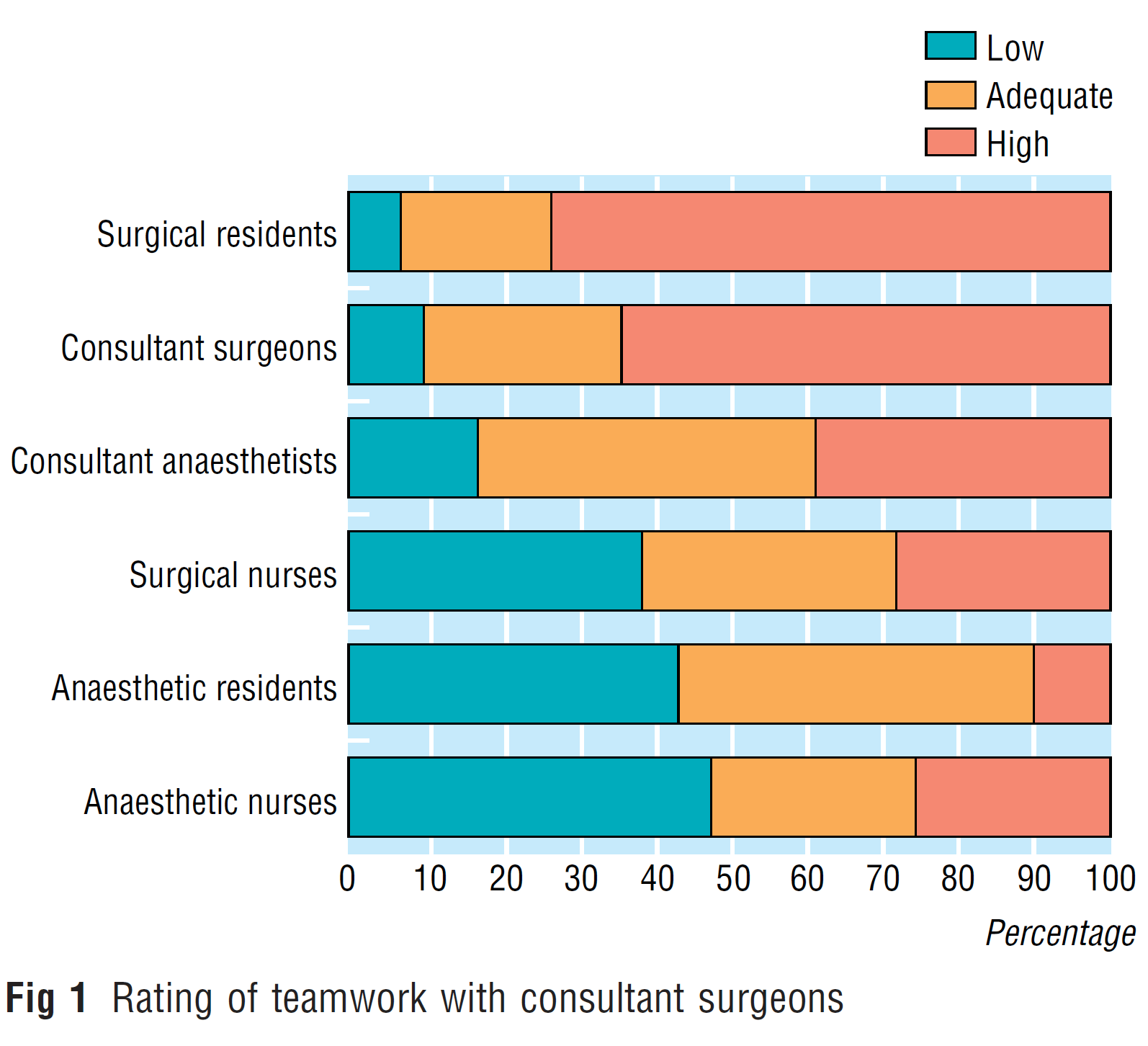
This finding has been replicated dozens of times in different countries, different specialties, different decades. The most consistent result in operating-room safety research is this: the senior surgeon and the nurses in the same room, looking at the same teamwork, do not see the same thing.
Makary and colleagues, summarising the pattern, gave it the title that has stuck: Teamwork in the eye of the beholder.
The Cost
The cost is not abstract.
The Joint Commission’s review of wrong-site surgery in the United States, an event that should never happen, and yet still happens in the order of once per ten thousand operations, found communication failure to be the leading contributing factor, present in around 70% of cases.
Retained surgical items are more common still, somewhere in the range of one per ten thousand procedures, and the leading root causes are again communication breakdown, hierarchical boundaries, and a culture in which the count is questioned by the people who have least authority to question it.
Sentinel-event reviews in country after country come back with the same finding: the technical execution is rarely the problem. The team failed to function as a team.
It is worth saying clearly here: surgery has not done nothing. The WHO Surgical Safety Checklist, introduced in 2008 and validated by Haynes, Gawande, and the Safe Surgery Saves Lives group in the NEJM, lowered surgical mortality and complications across a global pilot study by more than a third. It is a real intervention, with a real effect, and is the closest thing surgery has to its own CRM moment.
But a checklist is not a culture.
A checklist tells you to introduce yourselves at the start of a case. It does not tell the scrub nurse, on the hundredth case of the year, that her observation that a swab might be missing is something the surgeon has been trained to receive — not tolerate, not indulge, but receive, the way a first officer’s “we are low on fuel, sir” is received in a cockpit today.
Aviation did the procedural part — the checklists, the time-outs, the standardised phraseology. Then it did the cultural part. Surgery has done the procedural part. The cultural part remains mostly aspirational.
The part that is hard to write
There is no kind way to put this, so let’s put it plainly.
The reason aviation could change is that aviation, when it looked at the data, was willing to accept that the captain was the problem. Not a bad captain. Not a careless captain. The role of captain, as it had been culturally constructed for most of the 20th century, was the problem. The same person who needed to lead in a crisis had been built into someone who could not be told, by anyone else in the room, that he was wrong.
In surgery, the parallel role is the consultant surgeon. The most experienced person at the table. The one whose judgement, training, and authority are most of the reason the patient is alive. None of that is wrong. All of that should remain.
The question is whether that role, as it is currently constructed in most operating rooms in the world, allows the person occupying it to be told they are wrong, by the people in the room best placed to see it.
The honest answer, in most ORs, is: not really. Not in the way a first officer can tell a captain. Not without cost. Not without the junior member calibrating exactly how to phrase it, exactly when to raise it. The information that would prevent the worst outcomes is filtered through a hierarchy that aviation dismantled forty years ago.
This is not a criticism of any individual surgeon. Most of us were trained inside this culture, by people who were trained inside it, and we operate inside it because no one has shown us a different one.
The criticism is of the culture, not the operator. But cultures are made of operators. Which means the culture changes when the operators decide it should.
What to do with this, on Monday morning
The practical actions are not new, and they are not many.
The pre-op briefing as a real conversation, not a recital.
The deliberate question, asked by the surgeon, of every member of the team: Is there anything that concerns anyone about this case?
The pause to actually hear the answer.
The willingness, in front of a trainee, in front of a rep, in front of a patient — to say the nurse was right and I was wrong when she was, and to do it in a way that costs the nurse nothing and pays her something.
The single highest-leverage thing any senior surgeon can do for the safety culture of their OR is to publicly receive a correction from a junior member, well.
Once. Visibly. Without sarcasm. Without face-saving.
The team learns more from that one moment than from a year of formal training.
In December 1978, the first officer of United Flight 173 had a fuel gauge in front of him, and a captain in front of him, and he could not figure out how to make the second one look at the first. He was not a bad pilot. He had not been trained to know how.
Forty-seven years later, somewhere this week, a scrub nurse in an operating room will see something the surgeon is missing.
And she will calculate the cost of saying it.
And she will decide that the cost is too high.
Aviation taught its junior crew the right to speak. More importantly, it taught its senior crew the duty to listen.
That is the part of CRM that surgery still has to import.
That’s it for this week. See you in the next one.
 | A guest post by
|
 | A guest post by
|